Gi vs. No-Gi BJJ: the same or two completely different sports? What are the similarities and differences? While both share the same core principles — leverage over strength, ground control, and submission grappling — they develop very different skills and attract very different personalities. Whether you’re a complete beginner or coming from another martial art, understanding this distinction is the first step to finding your fit on the mat.
What Is Gi BJJ?
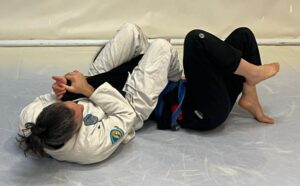
The Gi (also called kimono) is the traditional uniform used in Brazilian Jiu-Jitsu — a heavy cotton jacket, pants, and a belt that shows your rank. In Gi BJJ, the uniform is part of the game. You can grab your opponent’s collar, sleeves, and lapels to control them, set up submissions, sweep and off balance them. This creates a highly technical, grip-heavy style of grappling where patience and leverage matter enormously.
Why train with the Gi?
🐢 Slows things down: The Gi reduces pace, making it ideal for learning and internalizing fundamentals.
🤝 Better control: Collar and sleeve grips give you leverage over larger or stronger opponents.
🧠 Deep technique: Gi training builds a thorough understanding of body mechanics and positioning.
🥋 Traditional path: Most belt promotions in BJJ are rooted in Gi training — it’s the foundation of the art.
If you’re someone who loves the chess-like, methodical side of martial arts, Gi training will probably click with you fast.
What Is No-Gi BJJ?
No-Gi means you ditch the uniform. Instead, you wear shorts and a rash guard. There’s no jacket to grab, no collar to attack.
Without the grips, everything speeds up. You rely on body locks, underhooks, over-hooks, and head control instead of collar and sleeve grips. The grappling style is more dynamic and feels closer to wrestling or MMA.
Why train No-Gi?
⚡ Fast and explosive: No-Gi is more athletic and dynamic — perfect for those who love an intense, high-energy roll.
🥊 MMA-ready: No-Gi translates directly to mixed martial arts — ideal if fighting or self-defense in realistic scenarios is your goal.
👕 No special gear needed: A rash guard and shorts are all it takes — no kimono required to get started.
No-Gi tends to feel a bit more immediately intuitive for people coming from a wrestling or fitness background.
Gi vs. No-Gi BJJ: Which Should Beginners Choose?
Honestly? Both. And here’s why. Many coaches recommend beginners start with the Gi because it slows the pace down and forces you to focus on technique over athleticism. When you can’t muscle through a position, you have to learn it properly. The Gi acts almost like training wheels — in the best possible way.
That said, No-Gi is equally valid as a starting point, especially if you have a wrestling background or your goal is MMA. The truth is, training both makes you a better grappler overall. Gi training sharpens your technique; No-Gi training sharpens your speed and body awareness. They complement each other perfectly.
Train Gi and No-Gi BJJ at BIWA in Berlin
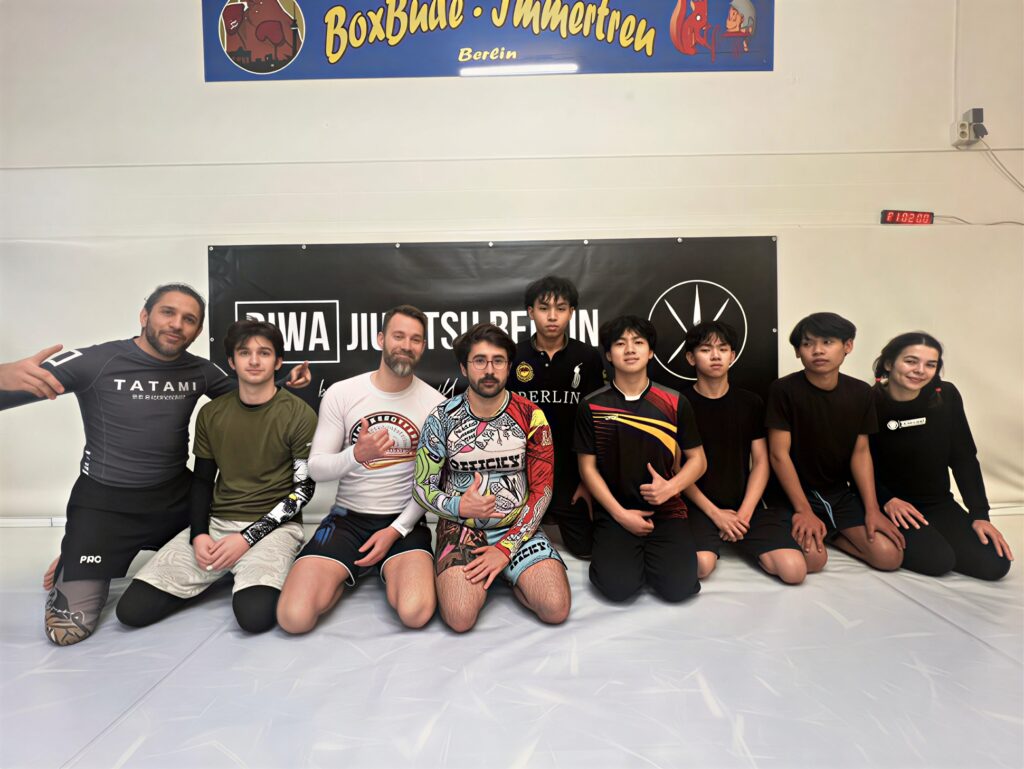
At BIWA JIU-JITSU in Berlin, we offer both Gi and No Gi classes — so you don’t have to pick sides. Our classes are built for beginners. No experience needed, no pressure — just a welcoming community and quality coaching from day one.
Ready to find out which style suits you?
Come try it for yourself 👉 Book Your Free Trial Class
Frequently Asked Questions: Gi vs. No-Gi BJJ
Do I need both a Gi and No-Gi gear to get started?
Not at all. If you start with No-Gi, all you need is shorts and a rash guard. For Gi training, you’ll also need a kimono. At BIWA you can rent a Gi for your first Gi classes.
Is Gi or No-Gi BJJ better for self-defence?
Both have merit. Gi BJJ builds deep technical control that translates well to real-world situations. No-Gi is arguably more realistic since most confrontations happen in everyday clothes. Training both gives you the most complete skill set.
How long does it take to see progress as a beginner?
Most beginners notice real technical improvements within the first months of consistent training. BJJ is a long-term investment — but that’s exactly what makes progress feel so rewarding when it comes.
Is BJJ suitable for small people?
Absolutely. BJJ is one of the few martial arts where technique and leverage can genuinely offset physical strength differences.